
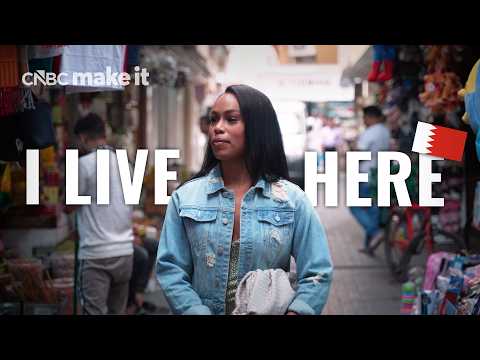
Bahrain rarely shows up in “best places to live abroad” lists — and that’s exactly why the people who discover it tend to fall hard for it.
In the video that accompanies this article, Mikayla McGhee, a 29-year-old American remote worker, shares her experience moving from Atlanta to Bahrain in late 2022. What starts as a personal relocation story quickly becomes something bigger: a case study in how quiet, safe, overlooked places are winning over globally mobile professionals.
If you’ve never seriously considered Bahrain before, that’s kind of the point.
👉 Watch the video alongside this article — it adds nuance, visuals, and emotional context that no written summary can fully capture.
Bahrain at a glance: small, calm, and deeply livable
Bahrain is a small island nation in the Middle East, located in the Persian Gulf between Saudi Arabia and Qatar. It’s compact, peaceful, and far less chaotic than many global cities competing for remote workers.
For Mikayla, the contrast with life in the U.S. was immediate:
- Personal safety improved dramatically
- Daily stress dropped close to zero
- The social environment felt welcoming rather than guarded
She describes Bahrain as calm in a way that’s hard to explain until you experience it — fewer sirens, less visible policing, and an absence of constant low-grade anxiety.
For background:
- Official tourism site: https://www.bahrain.com
- Country overview (CIA World Factbook): https://www.cia.gov/the-world-factbook/countries/bahrain/
“The culture shock was that things were better”
Many Americans grow up absorbing negative or incomplete narratives about the Middle East. Mikayla admits she arrived with those same assumptions — and found them dismantled almost immediately.
Key cultural takeaways:
- Strong preservation of local traditions
- High levels of English fluency (English is taught from early schooling)
- Minimal xenophobia reported by her as a Black American woman
- A close-knit social fabric where introductions spread quickly
Bahrain’s size works in its favor. It doesn’t take long to feel “known,” which is something many expats struggle to find in larger global hubs.
Bahrain vs Dubai: cousins, not competitors
Mikayla describes Bahrain and Dubai as “cousins.”
They share:
- Climate
- Regional culture
- Modern infrastructure
- International populations
But Bahrain feels 20–25 years behind Dubai — not in a bad way. Development is ongoing (new marinas, tourism projects, real estate), but the pace is slower, quieter, and more human-scaled.
This makes Bahrain appealing to people who like the idea of Dubai, but not the intensity.
The reality of daily life (including the heat)
There’s no sugar-coating one thing: Bahrain is hot.
Summer temperatures can exceed 113–115°F (45–46°C). Life adapts accordingly:
- Pools are common
- Indoor spaces are well-cooled
- Daily rhythms shift away from peak heat
If you don’t tolerate hot climates well, Bahrain may not be your place. But if you thrive in warmth and sunshine, it can significantly improve mood and lifestyle — something Mikayla emphasizes repeatedly.
Working remotely from Bahrain: how it actually works
Mikayla works as a Senior Performance Marketing Manager for a B2B SaaS company, fully remote and paid in USD.
Her setup highlights a growing global pattern:
- U.S. salary
- Overseas cost structure
- Flexible time zones
She works U.S. Eastern Time from Bahrain, starting her workday in the evening and using daytime hours for personal life, fitness, and errands. For her, the time difference is a feature, not a bug.
For readers curious about the broader trend:
- Remote work data: https://www.weforum.org/topics/remote-work
- Digital nomad trends: https://www.mckinsey.com/industries/technology-media-and-telecommunications/our-insights/what-do-we-know-about-the-digital-nomad-economy
Cost of living, healthcare, and money management
Some practical highlights from her experience:
- Healthcare: Free for residents through Bahrain’s public system
- Groceries: Fresh, fewer preservatives, but spoil faster
- Savings: Easier to save due to lower daily stress and costs
- Taxes: Still pays U.S. taxes as a U.S. citizen abroad
She continues to invest in:
- High-yield savings
- Roth IRA
- 401(k)
This is a reminder that living abroad doesn’t mean abandoning financial discipline — in many cases, it makes it easier.
For general U.S. tax context abroad:
- IRS – U.S. citizens living overseas: https://www.irs.gov/individuals/international-taxpayers/us-citizens-and-resident-aliens-abroad
Why Bahrain feels like “home” to some expats
What stands out most isn’t luxury or arbitrage — it’s emotional safety.
Mikayla describes:
- Less chaos
- Less constant bad news
- Fewer unknowns
- More predictability
Her blood pressure literally improved after leaving a more stressful environment. That may sound anecdotal — but it aligns with broader research on stress, environment, and health.
She’s now planning to buy real estate in Bahrain, even if she doesn’t stay forever — a signal of long-term confidence in the country.
Why this story matters beyond Bahrain
This isn’t really a story about Bahrain.
It’s about:
- Americans questioning default life paths
- Remote work unlocking unexpected destinations
- Smaller, quieter countries becoming viable alternatives
- Quality of life outweighing prestige
Bahrain just happens to be a clear example of how “slept-on” places can outperform famous ones for the right kind of person.