



Before Borders, There Were Traders, Nomads, and Corporations.
For many professionals considering relocation, borders feel absolute.
They appear as fixed lines on maps, reinforced by passports, visas, and permission systems that determine where you can live, work, or belong. The modern world presents borders as if they have always existed this way—natural, immovable, unquestionable.
But that sense of permanence is an illusion created by proximity.
When you zoom out—far enough, and long enough—borders begin to look less like truths and more like tools.
Borders are newer than they feel
The world of passports, immigration offices, and national entry controls is remarkably recent.
For most of human history, movement preceded borders. People migrated for water, trade, safety, climate, labor, and opportunity long before the modern nation-state existed. Fixed national boundaries—enforced through documentation and centralized authority—only became widespread in the late 19th and early 20th centuries, alongside industrialization, colonial administration, and the rise of bureaucratic governance.
Passports themselves were not standardized until after World War I.
What we now experience as rigid, identity-defining borders are, historically speaking, administrative solutions to specific political and economic problems—not ancient facts of human organization.
How many borders were drawn after the people were already there
Much of today’s global map was assembled quickly, externally, and often without regard for the movement patterns that preceded it.
In the Middle East, contemporary borders emerged largely after the collapse of the Ottoman Empire following World War I. The dismantling of Ottoman territories was formalized through agreements such as the Sykes–Picot Agreement (1916) and later League of Nations mandates administered by Britain and France. Long before these borders existed, trade routes, religious centers, and commercial hubs shaped the region. Cities like Baghdad, Damascus, and Cairo were major centers of exchange, scholarship, and migration for centuries—integrated into networks that stretched across North Africa, the Mediterranean, and Central Asia—well before modern nation-states defined who “belonged” within them.
Across Africa, colonial borders were largely the product of the Berlin Conference of 1884–1885, where European powers—including Britain, France, Germany, Belgium, and Portugal—partitioned the continent for administrative control and resource extraction. These borders cut directly across established trade routes, kingdoms, and migratory paths such as those of the Ashanti, Yoruba, Hausa, Swahili, and Tuareg peoples. Lines were drawn to manage territory efficiently from afar, not to reflect how people lived, moved, or worked. The result was a political map that often bears little resemblance to Africa’s historical economic and cultural geography.
In South Asia, the Partition of British India in 1947, overseen by the British colonial administration under Lord Mountbatten, divided the subcontinent into India and Pakistan with extraordinary speed. The Radcliffe Line, drawn in a matter of weeks, triggered one of the largest forced migrations in history. An estimated 14 million people were displaced as borders were imposed on populations that had long lived, traded, and worked across the region. Millions moved not because they chose to migrate, but because the border moved over them.
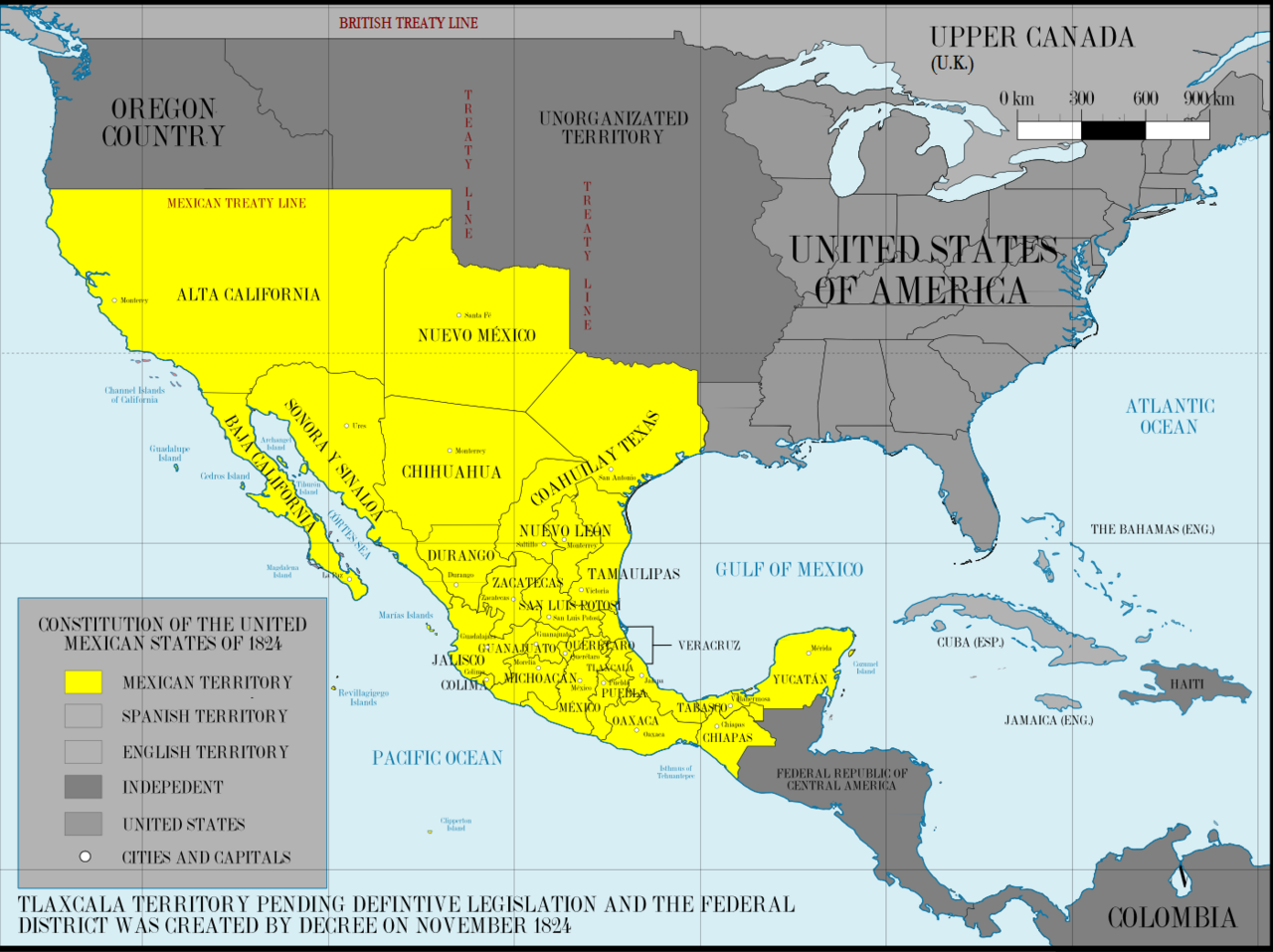
Even the United States–Mexico border is not an ancient divide. Much of what is now the southwestern United States—including California, Arizona, New Mexico, Texas, and parts of Colorado—was once Mexican territory. This shift followed the Mexican–American War (1846–1848) and was formalized in the Treaty of Guadalupe Hidalgo. The border moved, but families, labor patterns, trade routes, and cultural ties did not disappear with the line—many predated it by generations.
These examples are not offered to assign blame or reopen history. They are reminders of scale. Borders are often younger than the communities they govern.
The instinct to move is older than the map


Long before borders hardened, human progress depended on people who moved.
Nomads carried knowledge between regions. Traders connected distant markets. Interpreters, scribes, and specialists operated across languages and systems. Merchants and craftsmen followed demand. Labor flowed toward opportunity, not jurisdiction.
Every region has its own history of movement:
- caravan traders across North Africa and the Middle East
- maritime merchants along the Indian Ocean
- itinerant craftsmen and scholars across Europe
- pastoral nomads across Central Asia
- traders and intermediaries across West Africa
Movement was not deviance. It was infrastructure.
For many people today, the pull to relocate—to seek opportunity elsewhere, to operate across systems, to build a better life in a different place—feels deeply personal. But it is also deeply historical.
That instinct has been exercised for millennia.
Corporations as early engines of migration
One of the least discussed facts about migration is how often it has moved through institutions rather than outside them.
Long before modern multinationals, corporations acted as cross-border mobility systems.
The Dutch East India Company (Vereenigde Oostindische Compagnie, VOC), chartered in 1602 by the Dutch government, is one of the earliest and most explicit examples. Often described as the world’s first multinational corporation, the VOC was granted extraordinary powers—including the ability to negotiate treaties, establish colonies, maintain armed forces, and administer territory. To do so, it moved administrators, traders, accountants, shipbuilders, engineers, and skilled labor across Europe, Africa, and Asia in pursuit of commercial expansion.
It was not alone.
The British East India Company, chartered in 1600, similarly transported vast numbers of professionals across South Asia, Southeast Asia, and the Middle East to manage trade, taxation, logistics, and governance. The Hudson’s Bay Company, chartered in 1670, played a central role in the movement of traders, surveyors, and administrators across large parts of what is now Canada, shaping trade routes and settlement patterns that persist today.
Portuguese trading houses op erating under the Estado da Índia, as well as later French and Spanish chartered companies, performed comparable functions—moving skilled labor, commercial intermediaries, and technical expertise across oceans to support expanding trade networks.
These corporations:
- transported professionals across continents
- built ports, warehouses, and cities
- created global supply chains
- accumulated economic and political power that often rivaled states
They did not move people out of altruism.
They moved them because economic expansion required talent to travel.
Corporations were, in effect, early transnational actors—operating beyond the authority of any single sovereign long before globalization was named or normalized.
Migration through work, not rebellion
What matters is not just that people moved—but how.
Most did not migrate as lone adventurers or ideological challengers to political authority. They migrated as:
- employees of chartered companies
- administrators of trade and territory
- engineers, navigators, and logisticians
- translators, clerks, and managers
Their movement was legitimized by work.
Corporations provided structure, protection, and institutional backing. They created pathways that allowed individuals to cross borders under the banner of productivity, commerce, and technical necessity—not political defiance.
In this sense, modern global careers are not a break from history.
They are its continuation.
The modern equivalents
As empires receded and nation-states consolidated, the role of moving people across borders did not disappear. It changed form.
In the 19th and early 20th centuries, large industrial corporations became the primary vehicles of structured mobility. Railroad companies, shipping lines, and mining firms moved engineers, surveyors, administrators, and skilled labor across continents to build infrastructure that underpinned industrial expansion. The growth of cities, ports, and trade corridors often followed the paths these companies laid down.
Later, oil and energy companies—including Royal Dutch Shell, BP, and Exxon—developed global staffing models that rotated geologists, engineers, project managers, and executives across regions in response to resource discovery and extraction. Corporate mobility was not a perk; it was operational necessity.
In the late 20th century, telecommunications companies, global consultancies, and financial institutions extended this pattern. Professionals moved through firms to install networks, manage capital flows, implement systems, and expand markets—often faster than governments could harmonize regulation or policy.
Today, technology companies, multinational banks, logistics firms, and professional services organizations perform a familiar function. Companies such as IBM, Microsoft, Siemens, Accenture, and later Google, Amazon, and SAP have built globally distributed workforces that rely on cross-border movement of talent, even as immigration systems struggle to keep pace.
The industries change.
The mechanism does not.
Corporations continue to act as mobility infrastructures—quietly enabling movement through employment, sponsorship, and economic justification long before borders formally adapt.
A modern example, lived quietly
My own career followed this pattern long before I had language for it.
I began working at Microsoft in Canada, at MSN in the early 2000s, at a time when the intersection of retail, media, and technology was still emerging. Those skills—understanding consumers, platforms, and digital behavior—were not yet common, but they were increasingly valuable.
In 2008, I was hired into Microsoft Research in Seattle and immigrated to the United States, sponsored by Microsoft through the TN visa system under NAFTA. My movement was not driven by disruption or reinvention. It was enabled by a global organization that recognized the transferability of my experience across borders.
Microsoft did what large corporations have always done when talent matters:
it moved people to where their skills were most useful.
That move accelerated my professional development, expanded my exposure to global systems, and deepened my understanding of how large institutions operate across borders. It was not framed as migration in the emotional or political sense. It was framed as work.
Only later did I recognize how closely this mirrored older patterns—skilled professionals moving through institutions that operated faster and farther than national boundaries alone.
A concept worth naming: Inherited Adaptability
Across generations, migration leaves behind more than stories. It leaves behind skills.
Inherited Adaptability is the problem-solving instinct, resilience, and system-navigation capacity passed down through histories of movement, disruption, or displacement.
Adaptability that did not begin with you.
For many professionals today—particularly those from regions shaped by colonialism, trade, or forced migration—the ability to read new systems, integrate quickly, and operate across cultures is not accidental. It is historical inheritance.
What looks like personal flexibility is often collective memory.
Why this perspective matters now
For professionals considering relocation, Borderless History is not about romanticizing movement or dismissing the realities of borders today.
It is about context.
Understanding that:
- borders are tools, not timeless truths
- movement has always shaped economic power
- corporations have long enabled cross-border careers
- migrant skill and leadership have repeatedly driven growth
…changes how you interpret your own ambition.
It reframes mobility not as rebellion or instability, but as participation in a long-running human pattern.
Closing reflection
History does not argue with the present.
It reframes it.
When you zoom out far enough, borderless behavior stops looking new—or reckless—and starts looking foundational.
Economic progress has always depended on people who crossed boundaries.
Long before we named them immigrants.

